A restoration is six real stages, and depending on the car’s condition and the scope of work, anywhere from a few months to several years from teardown to a finished, shaken-down car. The interactive timeline estimator on the home page lets you scope a real estimate for your own project; the list below is the same six stages as reference reading.
-
01
Teardown & Assessment 3–5 wks (typical)
The car is fully disassembled, every part tagged and photographed in place, and a written condition report documents rust, prior repairs, missing parts, and anything discovered that was not visible before teardown — the single biggest source of schedule surprises on any restoration.
-
02
Media Blasting & Metal Fabrication 8–18 wks (typical)
Panels are stripped to bare metal (media blasting for structural and underbody sections, chemical stripping where preserving original sheet-metal thickness matters most), rot is cut out, and replacement metal is fabricated or correct reproduction panels are welded in — the widest-swinging stage, since the true extent of rust and prior poor repairs is only fully known once the car is bare.
-
03
Mechanical Rebuild 8–18 wks (typical)
Engine, transmission, suspension, brakes, and fuel/cooling systems are rebuilt or overhauled — sourcing correct-date-code parts and, where a numbers-matching outcome matters to the client, keeping the original numbered components rather than substituting a service-replacement unit.
-
04
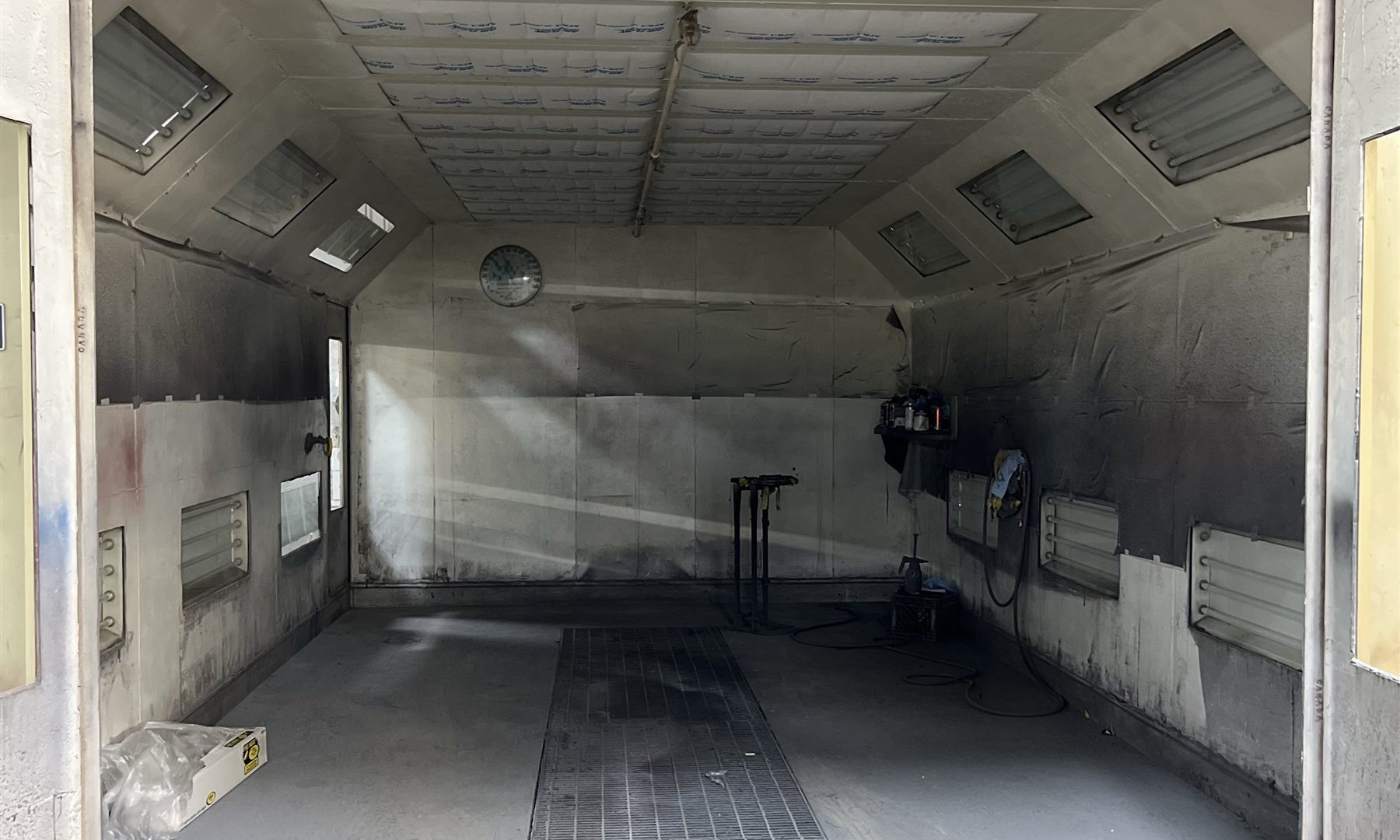
Paint & Bodywork 12–24 wks (typical)
Panels are block-sanded straight — commonly 40 to 100 hours of hand work on a full body before a single coat of color goes down — then primed, color-matched or corrected to the factory-documented code, and finished to a show-quality gloss.
-
05
Interior & Trim 5–10 wks (typical)
Upholstery, carpet, headliner, and trim are rebuilt to factory-correct patterns and materials — often the stage where genuine NOS (new old stock) trim hardware is sourced, since reproduction quality varies far more here than in sheet metal.
-
06
Reassembly & Sorting 8–14 wks (typical)
The car is reassembled from the tagged, photographed teardown, every system commissioned and sorted, and the finished car is shaken down on real miles — chasing the small leaks, rattles, and adjustments that only surface once everything is back together and running.
Why we don’t rush metal fabrication
Media blasting and metal fabrication is the stage most restorations get compressed under schedule pressure, and it’s also the stage that decides whether the finished car actually straightens under paint or just looks straight until the first humid summer. We don’t quote a fixed number of weeks for this stage until the car is fully stripped and every inch of the structure has actually been seen — a car that looked solid at teardown can reveal rot in a box section that was invisible from outside.
Numbers-matching, protected by default
See the numbers-matching explainer on the home page for what we actually check on the engine, chassis/VIN, transmission, and body tag. Unless an owner specifically wants a period-correct upgrade, we default to rebuilding the car’s original numbered components rather than reaching for a service-replacement part — because once an original block or transmission leaves the car, that numbers-matching status doesn’t come back.